
Yes, you can add more solar panels to your existing solar system in many cases. However, before buying additional panels, you need to understand how your current system works, how much energy you use, and why your existing solar installation is not meeting your needs.
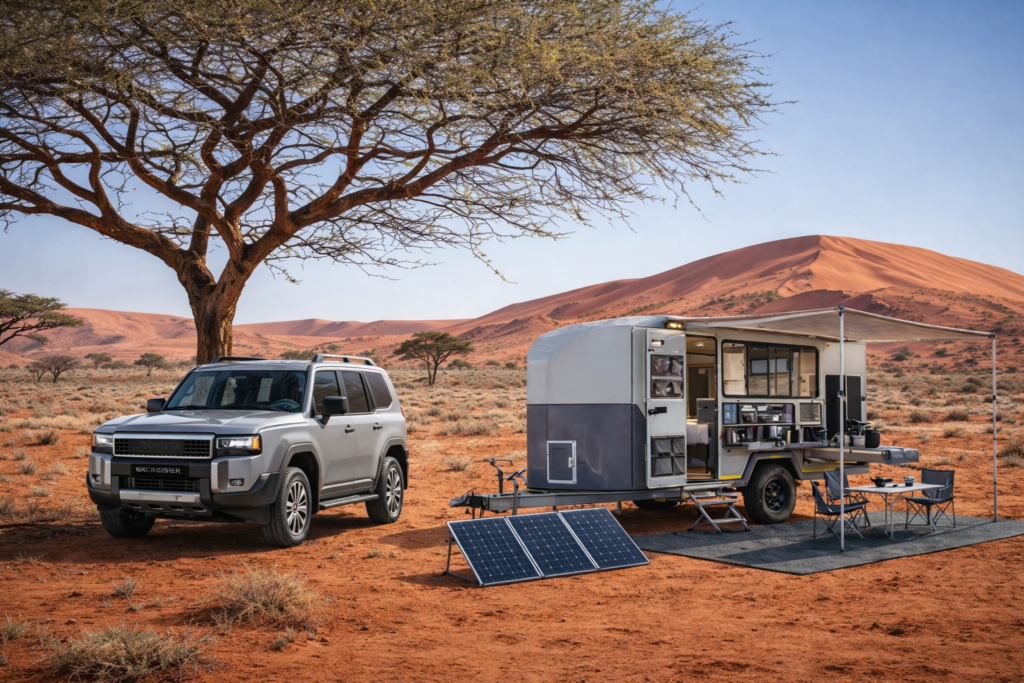
In my experience, adding more solar panels is not always the first thing you should do. Sometimes, the problem is insufficient solar generation. In other cases, the battery capacity, inverter limitations, charge controller specifications, or your daily energy consumption may be contributing to the problem.
I have worked on an existing solar installation where the client needed more solar energy to replenish his batteries. Rather than simply replacing the entire solar charging system, I added a separate MPPT solar charge controller with additional portable ground-deploy solar panels.
The experience reinforced an important lesson: expanding a solar system requires more than adding panels. You need to understand the relationship between solar generation, battery storage, and energy consumption.
So can you add more panels to an existing panel array…. once again, in many situations, yes. You can expand an existing solar installation by adding panels to the existing solar array or installing a separate solar array with its own maximum power point tracking (MPPT) charge controller.
The best approach depends on the equipment you already have and the amount of additional energy you need.
Before expanding your system, consider the following:
– Inverter capacity: If you have an inverter, does your inverter have sufficient capacity for your electrical loads? If you are adding more appliances rather than simply increasing solar generation, you may need to assess the inverter as well.
– Solar charge controller capacity: Can your existing controller handle the additional panels without exceeding its permitted PV input voltage, current, or total power?
– Battery capacity: Can your battery store the additional energy you expect to generate, and can it safely accept the resulting charging current?
Take note: that Lead Acid type batteries e.g Deep cycle GEL, AGM or Calcium types have a much lower charging capacity than the Lithium batteries which replaced them.
– Daily energy consumption: How much electricity do you use each day, and how much additional solar energy do you actually need?
– Available installation space: Can you install additional panels on your Caravan or RV roof, or would a portable ground-deploy array be more practical?
– System compatibility: Are the additional panels and controllers compatible with your existing battery voltage and electrical configuration?
These checks help you determine whether adding panels is a suitable solution or whether other parts of your system also need attention.
## Why Would You Need to Add More Solar Panels?
One of the most common reasons for expanding a solar system is that the batteries are not recharging sufficiently during the day.
You may have enough battery storage to supply your appliances at night, but that storage is only useful if you can replenish the energy you have consumed.
For example, suppose your Caravan or RV uses more electricity than your solar panels can generate on a typical day. The batteries will gradually lose their charge if the shortfall continues and there is no alternative charging source to replenish the used energy.
You might notice that:
– Your batteries do not reach a full state of charge during the day.
– You regularly need to use your vehicle alternator, a portable or in-situ generator or even grid electricity when available, to recharge your batteries.
– Your battery state of charge drops too low overnight.
– You have to switch off appliances because there is insufficient stored energy.
– Your system works reasonably well on sunny days but struggles when conditions are less
favourable.
Adding more solar panels may help address insufficient generation, however, you should first establish whether inadequate solar production is the actual problem.
You might notice that:
Shading,
poor panel orientation,
dirty panels,
equipment faults,
unsuitable charging settings, and
excessive energy consumption is also affecting your system performance.
## My Experience: Adding More Solar Panels to an Existing System
I worked on a Caravan solar installation where the client had a 2000 W inverter connected to a 12 V, 460 Ah battery system.
The problem was that the existing solar installation was not replenishing the battery energy sufficiently for what the client did, which was using more 230 V AC electrical kitchen appliances when off grid and also removing the portable power supply that was dedicated to only power and run his caravan fridge using a small portable panel and then also connected the fridge to the 12 V system having the 460 Ah capacity battery.
The client now needed more energy from his solar system, but it was important to consider both his available battery capacity and his solar generation.
### Understanding the Battery Capacity
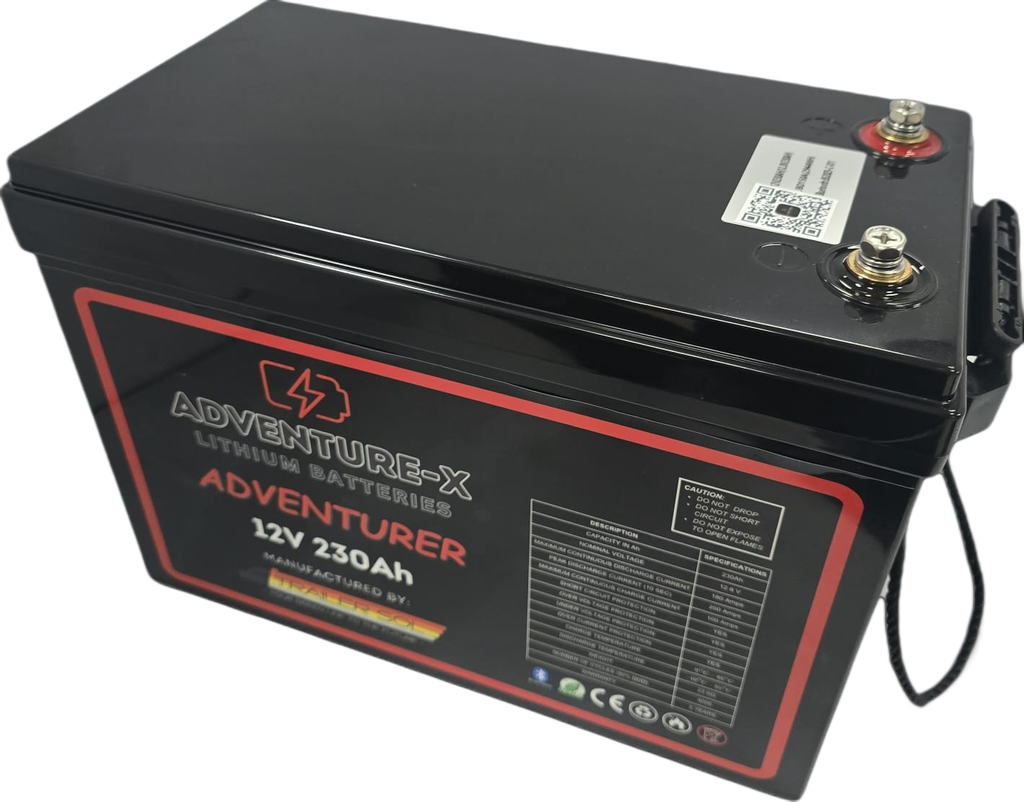
The battery bank was rated at 460 Ah and operated at 12 V.
Using the nominal battery voltage and capacity, its theoretical stored energy was:
12 V × 460 Ah = 5,520 Wh, or approximately 5.52 kWh.
This is the nominal energy capacity, not necessarily the amount of energy available for everyday use. The usable amount depends on the battery chemistry, manufacturer’s recommendations, operating conditions, and the depth of discharge permitted.
As part of managing the system, I worked with the client on limiting his energy use so that approximately 20% of the battery capacity would remain unused and that includes going through the night with using mainly lights, charging small components, e.g phones and tablets and running the fridge.
The purpose was to help him understand that his battery had limits and that he needed to manage his consumption accordingly. Kalahari grid has a short ABC principle we share to get this point across.
This distinction matters because a battery can have a substantial nominal capacity without being able to support unlimited energy consumption, which is many times overlooked.
A 2,000 W inverter also does not tell you how much energy the system can produce each day. The inverter’s wattage describes its power capability, subject to its specifications. Daily energy production depends on the solar array, sunlight, system efficiency, and operating conditions.
Adding a Separate MPPT Solar Charge Controller
After assessing the situation, I added a separate 30 A MPPT solar charge controller connected to 460 W of additional ground-deploy solar panels, which were 2 x 230 W exact same portable panels connected in series.
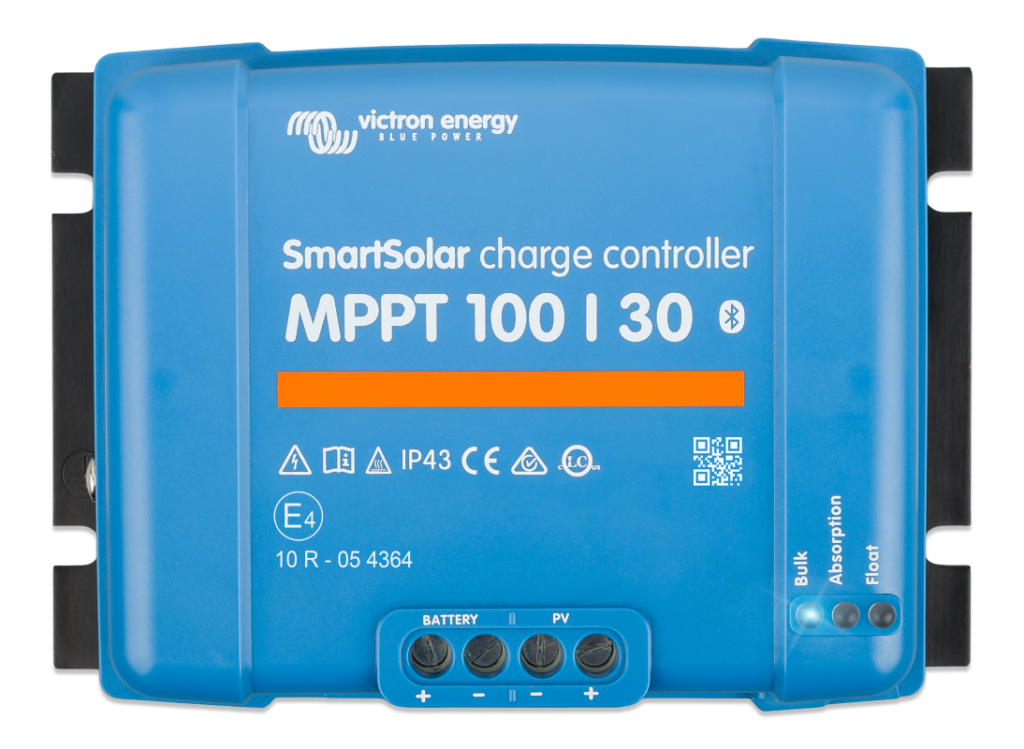
Instead of treating the existing solar array as the only source of charging power, the additional array provided another way to harvest solar energy through its own controller.
This approach can be useful when an existing charge controller cannot accommodate additional panels within its electrical limits, or when a separate array is more practical, especially if camping in the shade for part or most of the day.
However, adding another controller is not automatically necessary for every system. If the existing controller has sufficient capacity and the additional panels meet its electrical requirements, expanding the original array may be possible.
The important thing is to choose a configuration that works safely with the existing equipment.
### What Changed for the Client?
One of the most valuable outcomes was that the client became more aware of his system’s limitations.
He started using energy in line with the capacity of his battery rather than expecting the system to supply more energy than it could reliably support.
This was an important lesson: installing additional solar panels is only part of managing an energy system. The owner also needs to understand how much energy is available, when it is available, and how consumption affects the battery.
I do not have measured before-and-after figures to quantify the improvement in daily solar production or battery charging, so I would not claim a specific percentage increase in performance. The practical lesson from this installation was the importance of combining additional solar generation with better energy management.
## How to Determine Whether You Need More Solar Panels
Before purchasing additional panels, I recommend monitoring your existing system. This helps you identify the actual source of the problem instead of spending money on equipment that may not address it.

### 1. Monitor Your Daily Energy Consumption
Start by understanding how much electricity your appliances use.
List the appliances you operate, their power ratings, and approximately how many hours each runs per day.
For example, a 100 W appliance operating for five hours uses approximately 500 Wh, or 0.5 kWh.
Repeat this calculation for your other appliances to estimate your daily energy requirements.
Pay attention to appliances that consume significant energy, including:
– Refrigerators and freezers.
– Water pumps.
– Kettles, air fryers and other heating appliances.
– Induction cookers and microwave ovens
– Air conditioners.
– Laptops, mini projectors, Drone and Camera batteries, Starlink mini, compact flatscreen televisions, and other electronic equipment.
– and washing machines in large Off grid caravans and expedition trucks
Your actual consumption may differ from these estimates, so use an energy monitor or inverter monitoring system where available.
If your daily consumption is consistently higher than your solar system can generate, you may need more solar capacity, lower consumption, or a combination of both.
### 2. Monitor Your Solar Harvest
Solar harvest refers to the energy your solar panels generate over a period of time.
Many inverters and MPPT charge controllers provide monitoring information showing daily solar production in Watts, Watt-hours or kilowatt-hours.
Record your solar harvest over several days, and ideally over a longer period that includes different weather conditions.
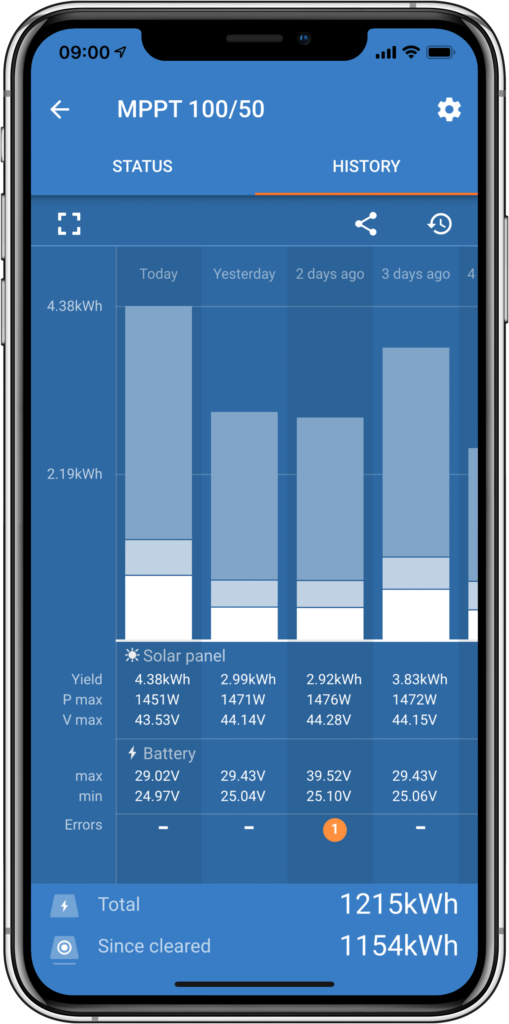
Look for patterns such as:
– Low production even during clear, sunny weather.
– Production that falls significantly when panels are shaded.
– Solar generation that is insufficient to cover daytime loads and recharge the battery.
– A large difference between expected and actual production.
Remember that the rated wattage of your solar panels is not the same as their daily energy production. A 460 W array will not continuously produce 460 W throughout the day.
Actual output varies with sunlight, panel temperature, orientation, shading, and other system losses.
Monitoring actual energy production gives you a much more useful basis for deciding how much additional solar capacity you need.
### 3. Monitor Battery State of Charge
Battery state of charge (SoC) indicates how much charge remains in the battery, usually expressed as a percentage and it can be a very compact device
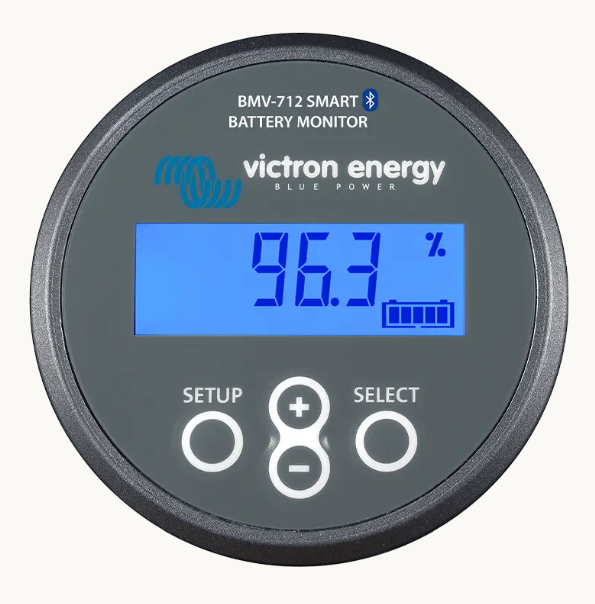
For example, a battery at 80% SoC is reported as having 80% of its charge remaining according to the monitoring system.
Monitor the battery’s SoC at different times:
– In the morning, before significant solar charging begins.
– Around the middle of the day.
– In the late afternoon.
– Before going to bed.
These readings can help you understand whether the battery is recovering during the day and how much energy you use overnight.
If the battery repeatedly finishes the day at a low SoC, investigate whether solar generation is insufficient, daytime loads are too high, charging is being limited, or the battery is experiencing a problem.
For lithium batteries, use the battery management system (BMS) and suitable monitoring equipment where available. For lead-acid batteries, voltage alone can be an unreliable indicator of SoC while the battery is charging or under load.
### 4. Understand Depth of Discharge
Depth of discharge (DoD) describes how much of a battery’s capacity has been used.
If a battery has been discharged by 20%, its DoD is 20%, and its remaining charge would nominally be around 80%, assuming a fully charged starting point and a sufficiently accurate measurement.
This is the opposite of state of charge:
– A higher SoC generally means more energy remains.
– A higher DoD means more of the battery’s stored energy has been used.
Understanding both measurements helps you manage the battery according to its chemistry and manufacturer’s recommendations.
In my installation, I wanted the client to understand that the battery had a practical limit. Leaving approximately 20%, or this percentage State of Charge of its capacity unused was part of the energy-management approach.
The appropriate reserve is not universal. It depends on the battery type, operating conditions, desired backup time, your personal decision and manufacturer guidance.
### 5. Monitor the Entire Solar and Energy System
This is one of the most important lessons I would share with any solar owner.
Do not monitor only the battery percentage or the solar panels. Monitor the entire system so you can understand how the different components affect one another.
Where the equipment supports it, track:
– Daily solar energy production.
– Caravan, RV etc. energy consumption.
– Battery SoC and DoD.
– Battery charging and discharging power.
– Inverter output and electrical loads.
– Grid or generator and Alternator energy used for charging.
– Faults, alarms, and charge controller limitations.
When you compare these measurements, you can start identifying why your system is not meeting your requirements.
For example, your panels might generate sufficient energy, but much of it could be consumed by daytime appliances. Alternatively, your array may be too small to cover both daytime consumption and the energy needed to recharge the battery.
These situations require different solutions.
## Can You Add More Panels to Your Existing Solar Charge Controller?
Sometimes, yes. But you must check the controller’s specifications before connecting additional panels.
A solar charge controller has limits that must not be exceeded, including its maximum PV input voltage, maximum permissible PV power, and applicable input current limits.
You also need to consider the panel configuration.
Connecting panels in series increases voltage, while connecting them in parallel increases current. The final arrangement must remain within the controller’s permitted operating range.
Pay particular attention to the panels’ open-circuit voltage (Voc), including the increase in voltage that can occur in cold conditions. The array’s short-circuit current (Isc) and the controller manufacturer’s instructions also matter.
Never assume that because a controller is rated at 30 A, it can safely accept any 30 A-rated panel arrangement. The PV input limits and the controller’s battery-side charging current are different specifications.
If the existing controller cannot safely accommodate the additional panels, you may need a separate controller, a larger controller or a different system design.
## When Should You Add a Separate MPPT Controller?
Adding a separate MPPT charge controller, as I did in my client’s installation, can be a practical option when expanding an existing solar system.
It may be appropriate when:
– The original charge controller has reached its permitted PV input capacity.
– You want to install a separate portable ground-deploy solar panel or array.
– The new panels have a different mounting orientation from the existing panels.
– You want the additional panel or array to operate independently of the original array.
– Replacing the existing controller would be less practical and more expensive than adding a compatible second controller.
However, both controllers must be suitable for the battery bank and configured according to the battery manufacturer’s charging requirements.
You must also verify that the combined charging current from all sources stays within the battery’s permitted charging limits. This is particularly important for a low-voltage battery system, where charging currents can be substantial.
A separate controller does not increase the inverter’s output rating or automatically increase the battery’s storage capacity. It provides an additional way to convert solar energy into battery-charging power.
For systems with lithium batteries, confirm that the BMS, battery specifications, and charging configuration support the combined charging sources.
## Can You Add Ground-Deploy Solar Panels to an existing Roof-Mounted Solar controller?
No. Ground-deploy panels can be a very useful way to expand a system when roof space is limited or when a ground array is easier to position for suitable sunlight, but connecting the two into one solar controller is Not recommended!
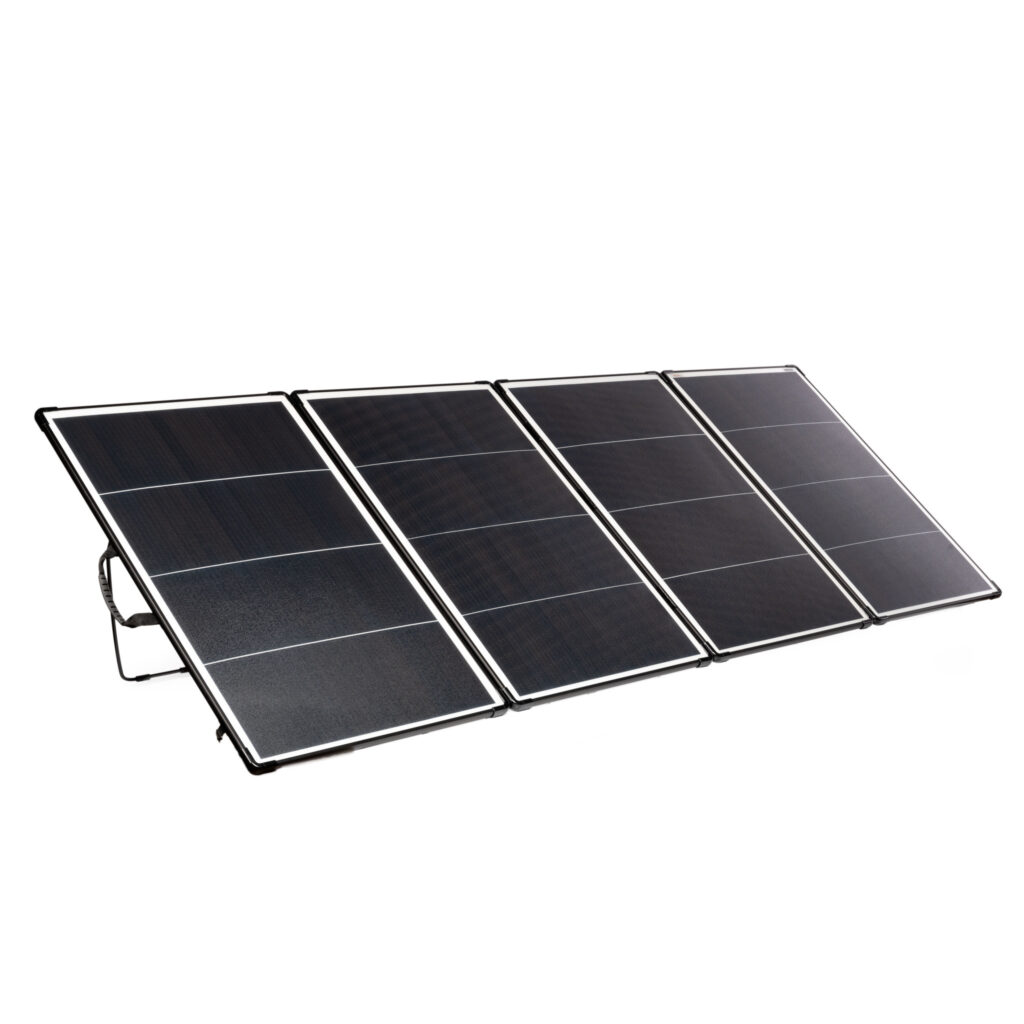
Before placing your portable ground-deploy panels, consider:
– **Sunlight and shading:** Choose a position with good solar exposure throughout the day.
– **Orientation and tilt:** Position the panels to suit the site and maximise useful energy production and move it regularly to keep the orientation for maximum harvest.
– **Cable distance:** Longer cable runs can increase voltage drop and initial costs, so cable sizing matters.
– **Electrical protection:** Use suitable overcurrent protection and an accessible isolation method and additionally you can add earthing and surge protection where required by a specific or regular area and applicable regulations.
– **Mechanical security:** Ensure the portable mounting configuration can withstand the local wind conditions and other environmental loads when placed outside.
– **Cable protection:** Protect cables against weather, physical damage, and other site hazards.
Ground-deploy panels are easier to access for inspection and cleaning, although the portable panel deployed area must remain secure and safe.
The electrical configuration is just as important as the physical deployment. Your panels and controller must be compatible, and the wiring must be correctly sized for the current, voltage, and cable distance.
## Will Adding More Solar Panels Increase My Battery Capacity?
No. Adding more solar panels does not increase the physical storage capacity of your battery.
Solar panels generate electricity. The battery stores energy. The inverter, if installed, converts DC electricity into AC electricity for compatible household type appliances and especially cooking appliances when Off grid.
These components work together, but they perform different functions.
Adding panels can help recharge your existing battery faster or provide more energy for daytime consumption, provided the battery and charging equipment can accept the additional power.
However, if your battery is too small to supply your loads overnight, you may still need additional battery storage.
Likewise, if your inverter cannot supply the power required by your appliances, more solar panels will not resolve that limitation.
Before expanding your system, identify which constraint is affecting you:
– Insufficient solar generation.
– Insufficient battery storage.
– Insufficient inverter output.
– Excessive energy consumption.
– Charging limitations or equipment faults.
The solution should address the actual problem.
## Common Mistakes to Avoid When Expanding a Solar System
There are several mistakes I would encourage solar owners to avoid.
### Adding Panels Without Checking the Controller
Connecting more panels without checking the controller’s voltage, current, and power limits can damage equipment or create unsafe conditions.
Always verify the electrical specifications before making changes.
### Ignoring Battery Charging Limits
More solar generation can mean more charging current. Make sure the combined output of all charging sources remains within the battery manufacturer’s permitted limits.
### Assuming a Bigger Array Will Solve Every Problem
If your daily energy consumption is too high, even a larger solar array may not provide the results you expect.
Monitor your loads and solar harvest before deciding how much additional capacity you need.
### Ignoring Battery Management
Repeatedly discharging a battery beyond its recommended limits can shorten its service life or trigger protective shutdowns.
Understand your battery’s recommended operating range and use suitable monitoring equipment.
### Failing to Monitor the Results
Once you have added panels, check whether the change has actually addressed the original problem.
Compare solar harvest, battery SoC, charging behaviour, and energy consumption before and after the expansion.
Without these measurements, it is difficult to know whether the investment has delivered the expected benefit.
## How Much Does It Cost to Add More Solar Panels?
The cost depends on how much additional capacity you need and whether your existing equipment can accommodate the expansion.
Your costs may include:
– Additional solar panels.
– A new or upgraded MPPT charge controller.
– Mounting structure/s.
– Solar cables and connectors.
– Electrical protection equipment.
– Installation labour.
– Additional monitoring equipment, if required.
If the existing controller can safely accommodate the new panels, the expansion may be relatively straightforward. If you need another controller, longer or different cable runs, a new mounting structure or Portable panels, or changes to the existing electrical installation, the total cost will be higher.
The cheapest option is not necessarily the best one. A properly designed expansion should be compatible with your existing equipment and meet your actual energy requirements.
I recommend assessing your current system before purchasing additional equipment. That way, you can invest in the components that will make a meaningful difference rather than replacing equipment unnecessarily.
## Final Thoughts: Monitor Before You Expand
So, can you add more solar panels to your existing system? In many cases, yes.
My experience has taught me that the first step is to understand what your existing installation can and cannot do.
In the installation I described, the client had a 2,000 W inverter and a 12 V, 460 Ah battery system that was not being replenished sufficiently. I added a separate 30 A MPPT charge controller and 460 W of ground-mounted solar panels.
An important outcome was that the client became more aware of his system’s limitations and started managing his energy use in line with his battery capacity.
That is the principle I would encourage other solar owners to follow.
**Monitor your energy consumption, monitor your solar harvest, understand your battery’s state of charge and depth of discharge, and monitor the entire system.**
Once you understand those measurements, you can make a more informed decision about whether you need additional solar panels, another charge controller, more battery storage, or simply better energy management.
The goal is not just to install more solar panels. It is to build a solar system that reliably meets your actual energy needs while operating within the limits of its components.
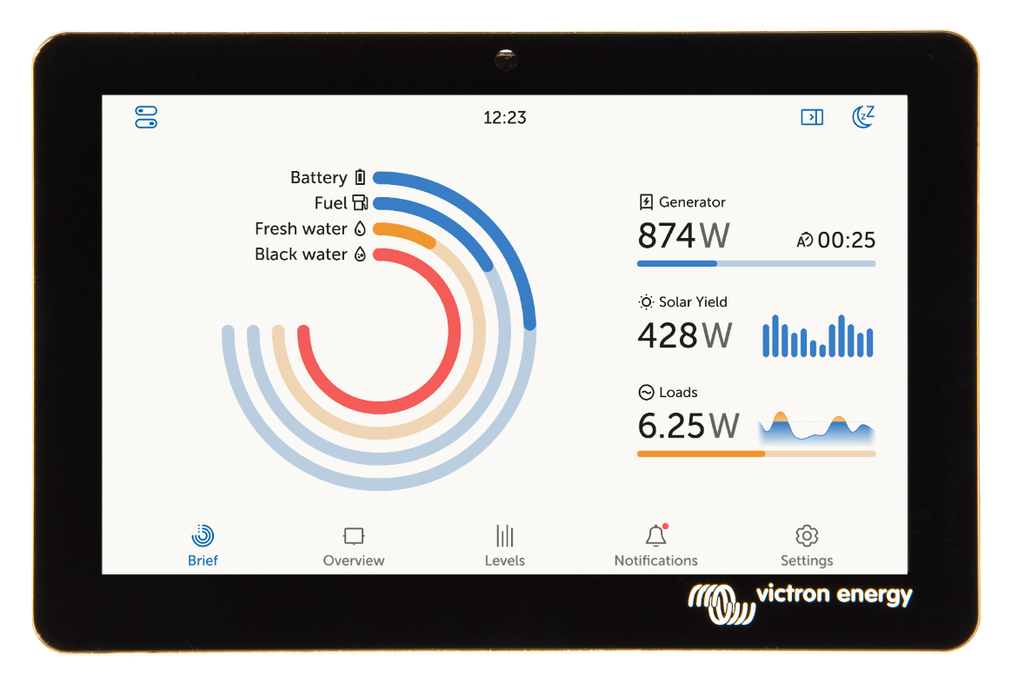
Select the Assessment on this website and go and play around with it and determine what amount of load do you have in mind and check the inverter and battery size when you are considering an Off-grid system for yourself…
If you require any assistance please reach out and we wil gladly guide you with your load assessment so that you can get first hand experience on where to start with your system design and also know what the limitations will be. This will immediately relate to the costs of a system and then further changes can be made to get the most budget friendly option to get you Off grid and to keep you there longer…